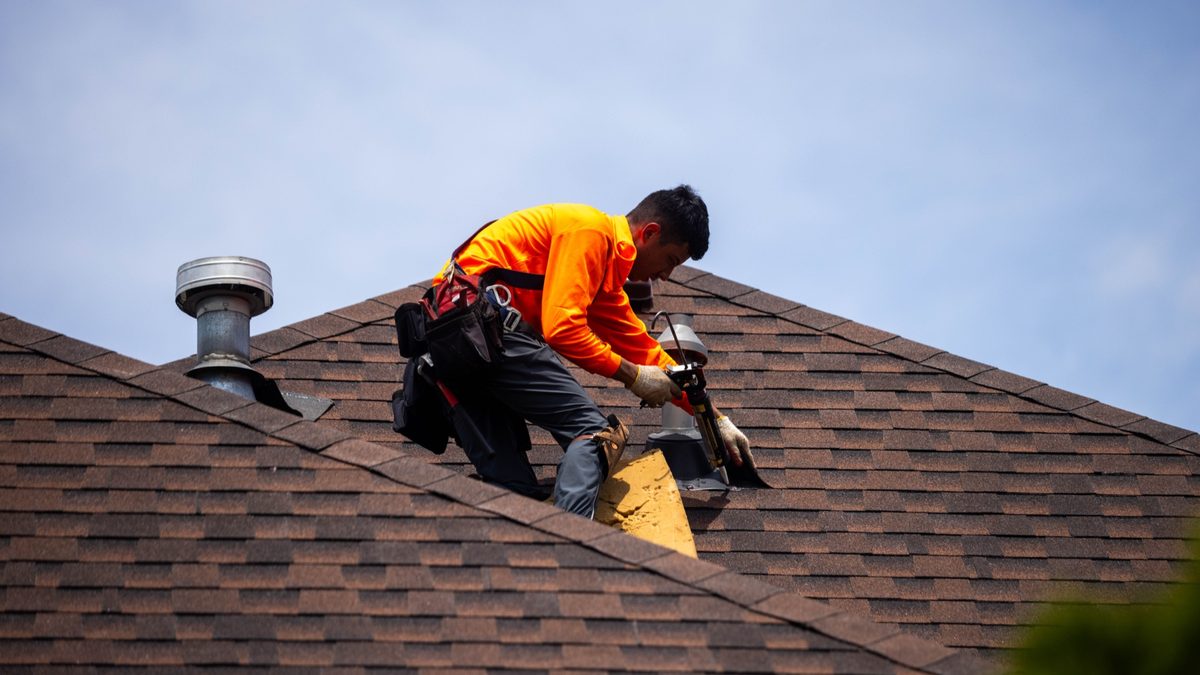
A missed call costs you your average ticket multiplied by the odds that caller would have booked. For a barbershop that might be $35. For a roofing company it might be $600. The dollar figure matters less than the pattern behind it: the calls you miss cluster in the hours you are busiest, and most of those callers never try you a second time.
This is the first of three things I look at when a local business tells me the phone is not ringing enough. Usually the phone is ringing fine. Nobody is picking it up.
How much is one missed call actually worth?
There is no industry number worth quoting here, because your number depends entirely on what you charge and what fraction of callers are real buyers. So do the arithmetic yourself. It takes about two minutes.
Take the calls and DMs you miss in a normal week. Multiply by 4.3 to get a month. Multiply by your average ticket. Then multiply by the share who would actually have booked if you had answered.
That last number is the one people argue about. I use 30 percent as a working assumption, and I want to be clear that it is an assumption rather than a measured fact. Some of the people calling you are vendors, wrong numbers, and price shoppers who were never going to book. If 30 percent feels generous for your business, run it at 15 and see whether the answer still bothers you.
| Example | Missed / week | Average ticket | At 30% | Monthly leak |
|---|---|---|---|---|
| Barbershop | 8 | $35 | 2.4 bookings/wk | ~$361 |
| Salon / colour | 10 | $120 | 3 bookings/wk | ~$1,548 |
| Fitness studio | 6 | $180 | 1.8 sign-ups/wk | ~$1,393 |
| Deck / exterior | 5 | $4,000 | 1.5 jobs/wk | ~$25,800 |
These are worked examples with made-up inputs, not benchmarks. Put your own numbers in. The point of the table is the shape of the result: for a low-ticket business the leak is annoying, and for a high-ticket trade it is the difference between a good year and a flat one.
Why don't they just leave a voicemail?
Because they have another tab open. Someone looking for a roofer after a storm or a stylist for Saturday is usually working a list, not calling one business and waiting. When you do not pick up, they are already dialling the next result.
Voicemail also asks the caller to do the work. They have to explain themselves to a machine, then wait an unknown number of hours, then be available when you call back. Every one of those is a reason to hang up.
The exception is when someone already knows you. Repeat customers leave voicemails. New ones mostly do not, which is exactly backwards from what you want, because the new one is the growth.
When do you actually miss the calls?
Almost always in one of three windows, and none of them are fixable by trying harder.
While you are working. You are on a roof, under a sink, behind a chair, or coaching a class. Your hands are busy and the phone is in a truck. This is the biggest bucket for trades and for anyone who is both the owner and the labour.
After hours. People search for local services at night far more than they call during business hours, because that is when they are sitting down thinking about the leak in the ceiling. Your phone is off. Your competitor down the road has an auto-reply.
During the rush. Saturday morning at a barbershop, or the week after the first hard freeze for a plumber. The calls arrive in a clump exactly when you have the least capacity to answer them.
The common thread is that the busy hours and the missed-call hours are the same hours. You cannot staff your way out of that as a small operation, and hiring a receptionist for a business doing a few hundred thousand a year rarely pencils out.
Does a traditional answering service fix it?
Sometimes. It depends what you need the call to accomplish.
| Voicemail | Answering service | Automated front desk | |
|---|---|---|---|
| Answers at 9pm | Yes | Usually | Yes |
| Answers your pricing questions | No | Rarely | If you script it |
| Books into your calendar | No | Sometimes | Yes |
| Texts the caller a link | No | No | Yes |
| Cost shape | Free | Per minute | Flat monthly |
A human answering service is good at making someone feel heard and bad at knowing whether you can fit a cut-and-colour in on Thursday. They take a message. You still have to call back. That is better than nothing and it is not the same as capturing the booking.
The honest case against automation is that it sounds like automation when it is set up badly. If a caller has to say "representative" four times, you have made things worse. That is a setup problem rather than a technology problem, but it is a real risk and worth naming.
What should an automated front desk actually handle?
Narrow it down. The mistake is trying to make it handle everything, which is how you end up with the frustrating phone tree.
In practice, three or four questions cover most inbound calls for a local business: what does it cost, are you open, where are you, and can I get in this week. If a system answers those four accurately and books the appointment, it has done the job. Anything genuinely unusual should hand off to you with a text and the caller's number.
The other half is the follow-up. A caller who reaches an automated line at 10pm and gets a booking link should also get a text in the morning if they did not book. Not a sequence of six. One.
If you want the version of this you can build yourself with nothing but a ChatGPT or Claude account, the after-hours auto-reply is the easiest place to start. Write down the three questions you get asked most, your hours, and your booking link, and have it draft the message. That alone closes a real part of the gap.
How fast do you have to call back?
Faster than feels reasonable. The window where a caller still remembers you and has not booked someone else is measured in minutes, not hours, and it closes fastest for urgent work. A homeowner with water coming through a ceiling is not waiting until tomorrow.
The practical target for a small operation is an acknowledgement inside five minutes and a real conversation inside the hour. The acknowledgement does not have to come from you. A text that says you saw the call, gives a rough price range, and offers a booking link does most of the work of a live answer, because it removes the caller's uncertainty about whether anyone is there.
What kills you is the silent gap. Twenty minutes of nothing reads as closed. The same twenty minutes with an immediate text in front of it reads as busy, which is fine and even reassuring.
What should the first message actually say?
Short, specific, and with one action in it. The instinct is to write something polished and long. Long messages get skimmed and the link gets missed.
Three things belong in it: acknowledgement that they reached out, one piece of real information that saves them a question, and a single link. That middle piece is what separates a useful auto-reply from an obvious robot. "Thanks for your message, we will be with you shortly" tells the caller nothing. "Most deck rebuilds run $8,000 to $20,000 depending on size and material" tells them whether to keep talking to you.
A workable shape looks like this:
"Hey, it's Devin at Runna Media. Sorry I missed you, I'm on a job until 4. Most projects like this run [range]. If you want to grab a time, here's my calendar: [link]. Otherwise I'll call you back this evening."
That message does four jobs at once. It explains the silence, sets a price expectation, gives a way to self-serve, and promises a specific follow-up. It also sounds like a person, because it is written the way you would actually talk.
Write yours once, in your own words, and then let it run. If you want help drafting it, paste three messages you have actually sent to customers into any AI assistant and ask it to match that voice. Do not let it write from scratch or you will get something that sounds like a brochure.
Does any of this change through the year in Chicago?
Considerably, and it is worth planning around because the leak is not evenly spread.
Exterior trades in the south suburbs get compressed demand. A hail or wind event puts every roofer in Mokena, Orland Park and Tinley Park on the phone at the same time, and the business that answers is the business that books. Missing calls in that week costs more than missing calls across the rest of the quarter combined.
Fitness has the January problem, where six weeks carry a meaningful share of annual sign-ups and the phone rings while you are running classes. Salons and barbershops get theirs around the holidays and through wedding season, when the calls arrive on a Saturday you are already fully booked.
The pattern is the same everywhere. Your peak demand and your peak inability to answer are the same moment. That is the argument for having something answer that does not get busy.
What about the calls you already missed?
This is the part people skip. Every business I look at has a list of people who called once, never got through, and were never contacted again. They are in your phone log right now.
Going back through that log is unglamorous and it is usually the fastest money in the building, because those people already demonstrated intent. They wanted the thing you sell badly enough to pick up a phone. The only reason they are not customers is that nobody called back.
Same logic applies to customers who stopped coming in. I wrote about that separately in how to get past customers to come back, because it is a bigger pot than most owners expect.
How do you know whether this is worth fixing?
Count for one week. Not an estimate from memory, an actual count. Every call you did not answer, every DM you did not reply to inside a few hours.
Then run the arithmetic above. If the monthly number is smaller than what it would cost to fix, do nothing and go back to work. That is a legitimate outcome and I would rather you reach it honestly than be talked past it.
If the number is larger, you have found something more reliable than a new ad campaign, because you are not buying attention. You are collecting demand you already paid for and then dropped. That is also why I would fix this before spending on ads rather than after, which is the opposite of the order most businesses do it in.
Frequently Asked Questions
How many calls does a small business typically miss?
There is no reliable universal figure, and any number quoted without a source should be treated with suspicion. The only count that matters is your own. Track missed calls and unanswered DMs for one week, multiply by 4.3, and you have a monthly figure grounded in your actual business.
Is an AI phone system going to annoy my customers?
It can, if it is set up to handle everything. It works when it is scoped to the three or four questions you actually get asked, books the appointment, and hands off to a human for anything unusual. A caller who gets a straight answer at 9pm is not annoyed. A caller trapped in a phone tree is.
Can I do this myself without paying anyone?
Partly, yes. An after-hours voicemail script and text auto-reply covering your hours, your pricing range, and your booking link can be drafted in an afternoon with any AI assistant, and it closes a real portion of the gap. The harder part is wiring it into your phone and booking software so it runs without you.
Should I fix missed calls before or after running ads?
Before. Ads buy you more calls, and if you are already missing a share of the calls you get, you are paying to miss more of them. Fixing the leak first also gives you a cleaner read on whether the ads are working.
What if most of my missed calls are spam?
Then your real leak is smaller and you should size it accordingly. Run the arithmetic with a lower booking assumption, say 10 or 15 percent. If the answer is still meaningful, it is still worth fixing. If it is not, you have saved yourself money.
Does this apply to DMs and web form fills too?
Yes, and often more so. Response time matters more on Instagram than on the phone because the expectation is faster. A form fill that sits overnight is functionally a missed call.
I am a one-person business. Is this overkill?
One-person businesses have the worst version of the problem, because there is nobody else to pick up while you work. That is the case where an automated first response usually earns its keep fastest.
Want help finding where your leads are leaking?
I do this walk-through with Chicago-area owners: count the missed calls, the dormant customers and the reviews you never asked for, and put a monthly number on all three. No charge and no pitch if the number is small.
Get in touch